Virtual Assistant Development Plan

2020 has seen accelerated growth in AI, specifically the Virtual Assistant space.

Last year, I transitioned from a business analyst to an AI Engineer developing Virtual Assistants.

Here is what you need to do to get up to speed and incorporate into your development plan before year end!

  1. Understand core terms and architecture

A Virtual Assistant (VA) is a Virtual Agent that provides information (and perhaps, automation) on a topic.

Users interact with Virtual Assistants using utterances (phrases). The utterance should trigger an intent, the topic the user is looking for. Within the intent, the user may be asked to provide additional information (slots) required to fulfil the intent and process the request. Containment metrics, the rate at which the bot can accurately link an utterance to an intent, is an important metric used to track bot performance.

I recommend reading the Age of Intent by P.V. Kannan to get an overview of Virtual Assistants and their capabilities.

Having worked on two Virtual Assistant platforms, understanding these core terms is fundamental to understanding how this technology works – giving you the ability to socialize AI within your organization and ultimately, shift your industry.

  1. Implement based on an (agile) strategy.

Start with a specific user case and build incrementally.

Build a proof-of-concept (POC) based on your use case.

In AWS Lex, the technical architecture will probably look like this:

An AWS Lex bot link to an AWS Lambda which will fulfil the intent. The AWS Lambda will retrieve information from a database or other AWS database service.

Next, jump into an AWS tutorial and build your first bot! Then, check out more sophisticated examples on the AWS GitHub for other POC ideas.

3. Share key learnings.

This could be in a lunch and learn, technical knowledge share or even part of a retro.

Share your use case, initial tech architecture and any customer input received.

This is a great opportunity to develop your technical storytelling skills, create compelling visuals that explain you POC and receive any feedback from stakeholders.

AI will continue to grow in 2020 and beyond. By incorporating these ideas into your development plan you will be able to explain key VA terms, demo a working POC and share your product journey with others as a thought leader.
Lessons Learned From Building My First Serverless Application

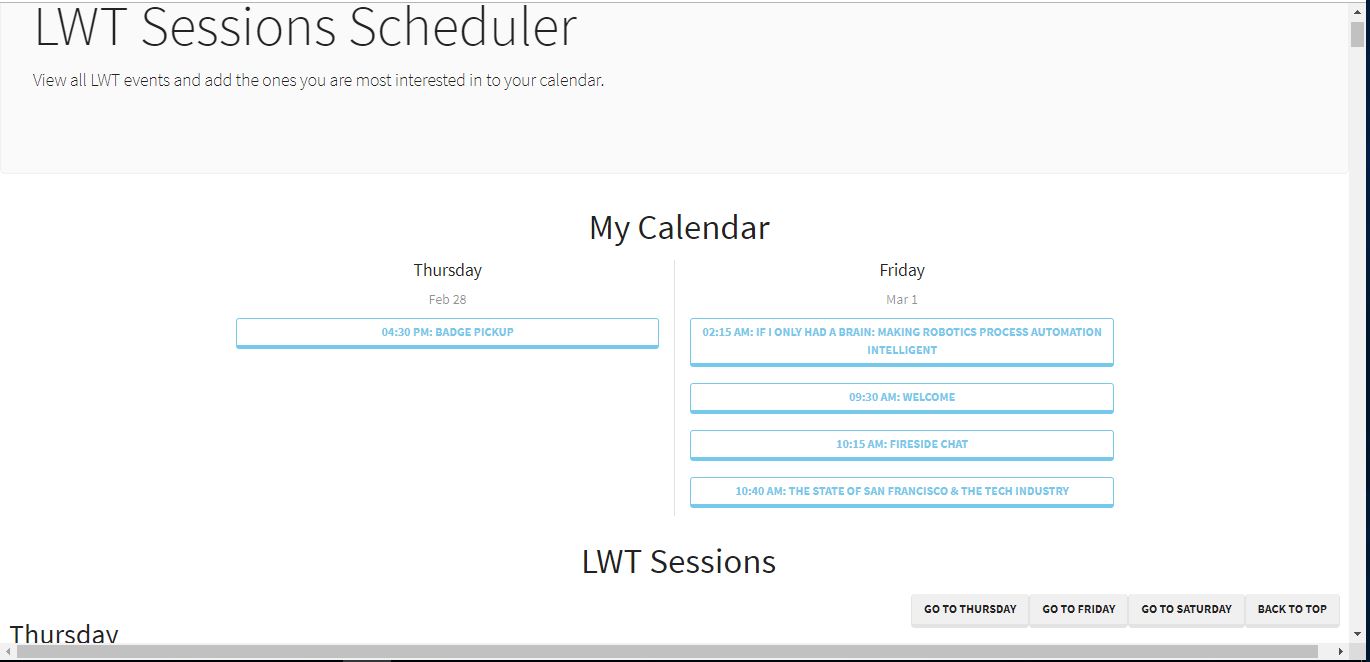
I recently attended an Amazon Workshop at a conference where I built my first serverless application. The application allows you to view, add and remove conference sessions to create a custom schedule.

The application used S3 to store the static file, DynamoDB to hold the conference sessions, Lambda to run the functions (UpdateSessions, GetSessions and AddSessions and API Gateway to create a custom API to trigger the functions.

I’ve learned a lot! It was rewarding to be able to add or remove sessions from my personalized calendar and understand how the components work.

My lessons learned:

  1. Test as you go and verify your tests. Make sure your Lambda functions populate your tables etc. This saves you time if there is an error or something doesn’t work as expected.
  2. Understand how components work independently and together. I accidentally created my DynamoDb table in the N.Virginia region whereas my function was in the N.California region. I had to recreate my table in N.California region as the table didn’t exist to my Lambda function.
  3. Lambda is super cool! I definitely want to focus my energy on utilizing this AWS Service. Lambda offers a lot of capabilities and was easy to use. It feels good to use and understand something you have built.

I will be building applications featured on the Amazon Compute Evolved Week Workshops. I will be using Amazon Lightsail and then buidling another application using Lambda. More to come but these lessons learned will help me as build other application!

Learning the Cloud: Why I’m jumping in & passionate about cloud

I was recently asked why I’m learning AWS and how my current skills/experience as a business analyst translate to a cloud career, particularly on a technical level.

It reminded me that making a career move isn’t always easy especially when I’m transitioning from a less technical waterfall role to a highly technical agile one.

So, why am I prepared to make this transition?

I am energetically learning the cloud. I’m starting with AWS, but plan to begin learning Azure and Google Cloud Platform within the next few months. I am learning the cloud using ACloudGuru an online learning platform, learning AWS Services through hands-on online labs and attending workshops at the Amazon Loft while I’m in San Francisco.

I am gaining certification in a short period. I became an AWS Certified Cloud Practitioner in under a month. I am getting my AWS Certified Solutions Architect – Associate in March 2019.

In the past, I’ve worked on infrastructure and cloud migrations in a business analyst and project management capacity. I’ve been a lead business analyst on a CMDB Migration, managed a cloud migration for a call center and been a Salesforce.com CRM administrator.

But why are you making this transition?

Part of my current role as a business analyst, is helping business users and stakeholders understand agile frameworks. It requires them to shift from a project to product mindset, from waterfall to agile. I see my shift from business analyst to Certified Solutions Architect as my logical transition into a more modern way of thinking and building technology.

I’m excited about learning the cloud because there is lots of opportunity in this space to grow my career and learn.

I have always been interested in reading and consuming information, which lead me to my interest in technology. At age 8, this meant learning how to use the library’s command-line like application to order books. Then, going to the library to retrieve a stack of books and gleefully reading in the corner alongside all types of people – accessing library services and pursuing knowledge.

However, I realized that a modern day librarian works in technology with a focus on helping people access information. It means learning the cloud and understanding its technology stack!

Cloud has transformed and will continue to transform how people access and store information as most modern day information is in (or soon to be in) the cloud. I want to educate and guide technical and non technical users in this space. There are important decisions to be made that have a high reaching impact

My true dream job would be a role that puts me in a position to explain cloud technologies to governments, non profits and those in the public sector. Cloud changes the way people access and store data. It’s important for the general public (and the institutions they rely on and trust) to understand how the cloud works so they can make informed choices.

At my current career stage, my focus is on learning AWS and other cloud platforms for the next 2-3 years and becoming a technical cloud expert. After gaining technical skills, I would move into a position that allows me to influence cloud strategy so institutions (public and private) can make important decisions on cloud usage and their user’s data.

I just wanted to share why I’m making this transition and why it’s important to me. Over the past month, I’ve been immersing myself in cloud concepts, AWS training and thinking about my career development by attending conferences. I wanted to articulate my vision and passion for this area!!

If you are making a similar career transition or are passionate about cloud technologies, please let me know. Comment below or contact me via the contact page.

I will be in San Francisco until Sunday morning. I’d love to pick your brain!

San Francisco and AWS Loft Adventures

Greetings from San Francisco!

I’m in town this week to learn more about AWS and attend a local tech conference.

On Wednesday, I went to a local coffee shop and did a few Amazon Labs such as Introduction to IAM, S3 and EC2. Amazon Labs are self-paced and give you a real-world context/scenario to configure. For instance, in the IAM lab, I configured users who support EC2 read-only access to EC2 while I gave EC2 Admin’s the ability to View, Start and Stop EC2 instances.

On Thursday, I ventured to the AWS Loft to attend Compute Evolved Week – Serverless. I attended a talk about AWS Lambda and Serverless Applications presented by Shivansh Singh.

I was proud of myself for being able to understand and keep up with the talk. AWS can be complex at times with many different services. It showed me how far I have come and how much knowledge I have gained in just 1 month.

I also realized the rate of change for AWS Services is real! In my
AWS Online Training Course, CloudGuru, the trainer Ryan Kroneberg emphasized that a Lambda function can only run for 5 minutes. At the talk, a question was asked about how how long a function can run and the response was 15 minutes. Just goes to show that AWS will always keep you on your toes!

After the talk, there was a workshop on building your first Serverless Web Application, Wildrydes.

I was short on time, so I used CloudFormation templates to breeze through the sections. I’ve never used CloudFormation before and could immediately see its power. You can quickly interact with AWS Services using pre-defined information. My AWS Online Training Course also talks about the importance on knowing CloudFormation inside and out if you want to be a solutions architect. I now understand why – it makes the job seamless and supports automation. I plan to complete the lab manually on my flight back to Chicago.

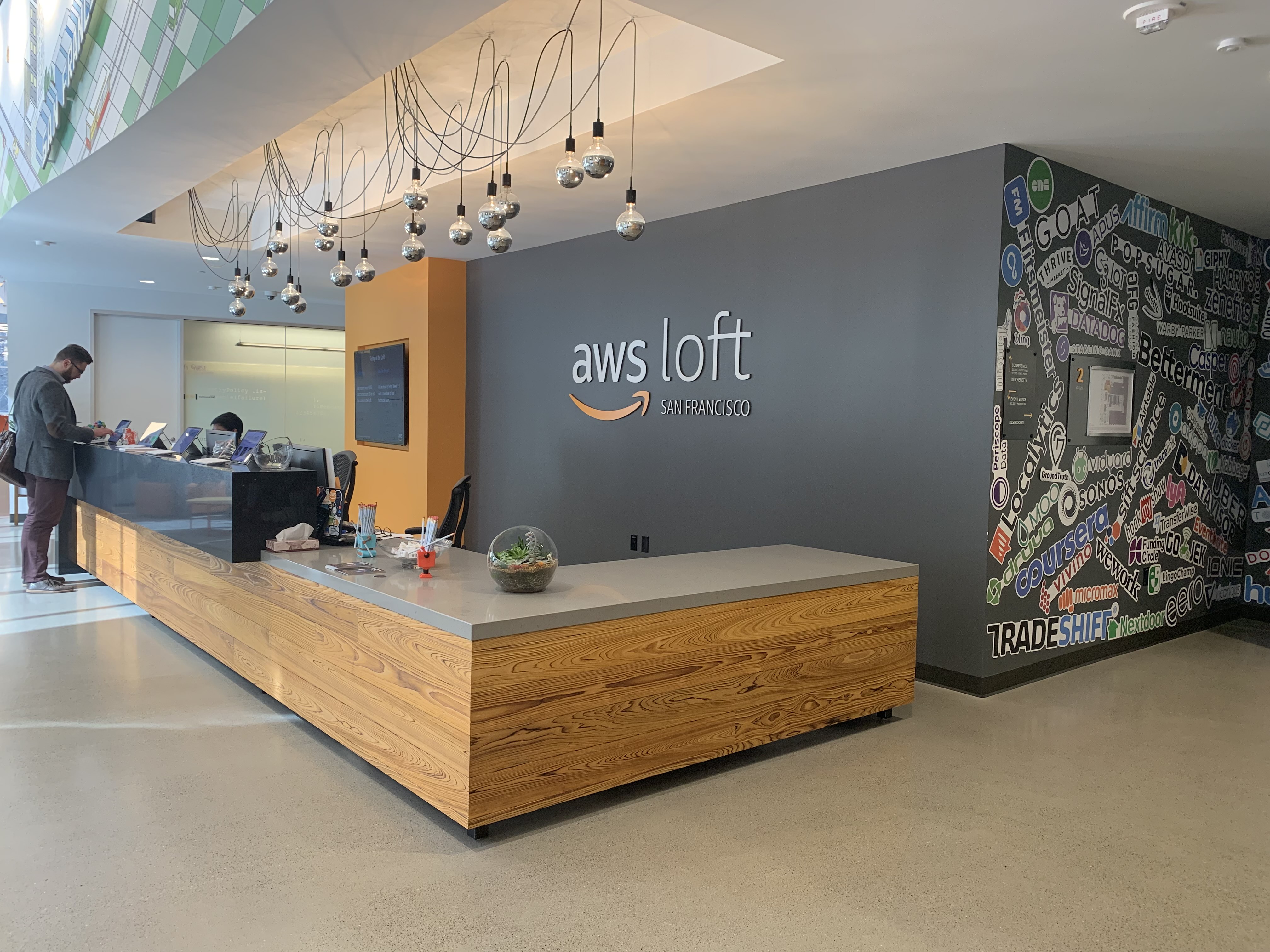
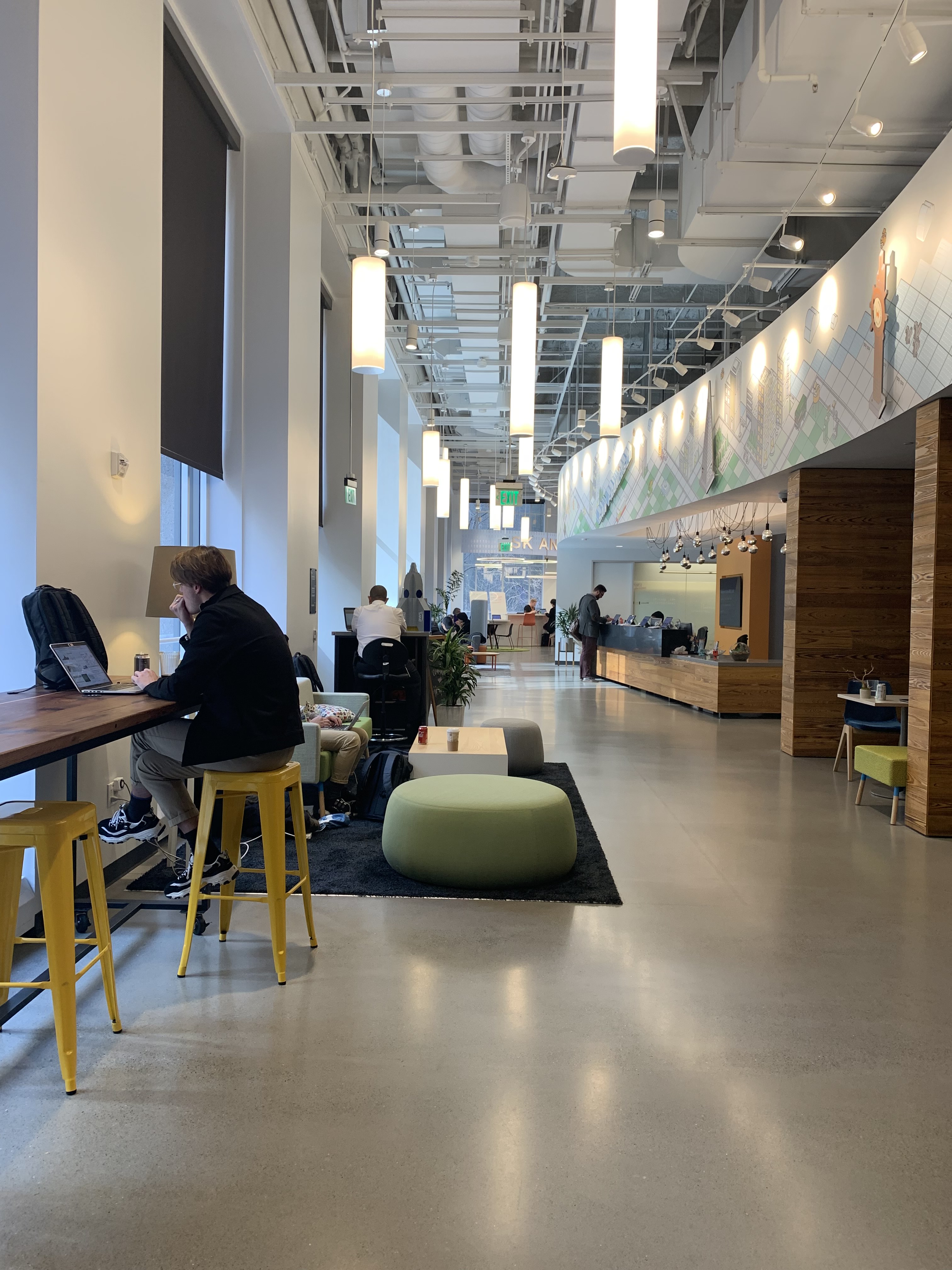
The AWS Loft itself was really cool! In addition to hosting workshops and events, it’s just a space where entrepreneurs or people learning AWS can come for free WiFi and get help from real Solutions Architects.

Women in Cloud Annual Summit

Last weekend, I was able to attend the Women in Cloud Annual Summit in Seattle, WA through a Diversity and Inclusion Scholarship.

I learned about the technical and business impact of the cloud. It was energizing to see so many mid-career and senior-level women working in cloud. It made me think about my own cloud career and what direction it will take in 10+ years. There are many great possibilities – time to jump in!

Technical: I heard from Eduardo Kassner, Chief Technology & Innovation Officer at Microsoft explain about the need to understand security, compliance, identity access management and networking as it relates to cloud computing. He said the shift to cloud computing is based on cost, which in turn makes it more accessible and easier for technologists to experiment, truly living in to an agile mindset. (As I am part of agile transformation efforts in my current role, the ability for cloud computing to enable agile organizations is exciting).

Another important aspect of cloud is understanding and communicating value to the customer as “the solution has to be in the language of the person in front of you”. I find Eduardo’s quote relevant to me as someone learning cloud terminology and beginning to learn the language of cloud. My goal is to be able to articulate complex technical cloud concepts to others and in order to do that, I need to understand how to convey the message in a simple, shared language.

Business: Throughout the conference, I heard how cloud technologies can enable female entrepreneurship. Notable speakers were Thai Lee and Sage Levine, two inspiring female entrepreneurs.

Thai Lee focused on goals and gave the framework she used for her own professional development. Her advice? “Don’t let your fears inhibit you and focus on things you have control over!” In her 20s she’s focused on learning, 30s she focused on her startup business and 40s she focused on her family. She also linked her career with financial goals. Thai Lee’s advice was relevant to me because her goals focus on personal and business aspects. Personally, I feel it’s important to remember both, but easier said than done if they compete! As I am learning the cloud, I will also make sure to incorporate some personal life goals at the same time. (More info to come)!

Sage Levine focused on leading a purpose based business (and life). She emphasized that a purpose based business creates a message that is bigger than your customer. She encouraged leveraging your time, your message, money, marketing and digital life. Her speech make me think of my greater purpose in cloud and life. I have always enjoyed reading and analyzing information especially in libraries. Prior to my college, my dream job was a librarian or writer to help others understand and access information. In the modern era, cloud engineers, advocates and evangelists protect, educate and provide access to the world’s information, which is ultimately why I see myself in cloud.

The Women in Cloud Annual Summit was a great experience!

I’m ready to hit the ground running and have scheduled my AWS Certified Cloud Practitioner Exam for 2/5. I’m ready to accelerate my career with cloud in 2019!

Hello World!

It’s January 23 and it has been 16 days since I’ve started learning the cloud.

I’m using this blog to document my journey and help others learn the cloud as well!

So far, I have:

  • completed 2 Pluralsite courses available for free within my organization (Cloud Computing: The Big Picture and Fundamentals of Cloud Computing).
  • completed Cloud Guru’s course (AWS Certified Cloud Practitioner)
  • Received funding to take the AWS Certified Cloud Practitioner Exam and the
  • AWS Certified Solutions Architect – Associate

I’m excited to attend the Women in Cloud Annual Summit this Saturday, January 26 to dive deeper into the Cloud!